Last weekend, I attended a reduction linocut workshop organised by Alan Birch at his print studio in Rossendale with artist/tutor Stuart Brocklehurst who specialises in Linocut, Mezzotint and Drypoint techniques.
The weekend went well and was very productive. Seven printmakers were involved in the workshop producing a lovely set of prints ranging from wildfowl to landscapes. The process is hard going as there is no printing press involved just plenty of elbow grease by means of hand burnishing, which can take its toll on your muscles, especially your shoulder blades as I found out later on. I did a bit of preparation beforehand and purchased a small barren for burnishing from Intaglio Printmaker based in London.
The main achievement was to get perfect registration of each colour onto each print using a registration frame which consisted of a flat board with bits of thin wood glued at right angles on top and thin cardboard strips to act as spacers. The linoleum sheet was also prepped beforehand and been cleaned with washing up liquid to reduce the oil on the surface. A wide inlaid groove was also cut out of the A4 sheet. This created a thin border of lino of less than a centimetre wide which would allow the roller to rest on it while printing.
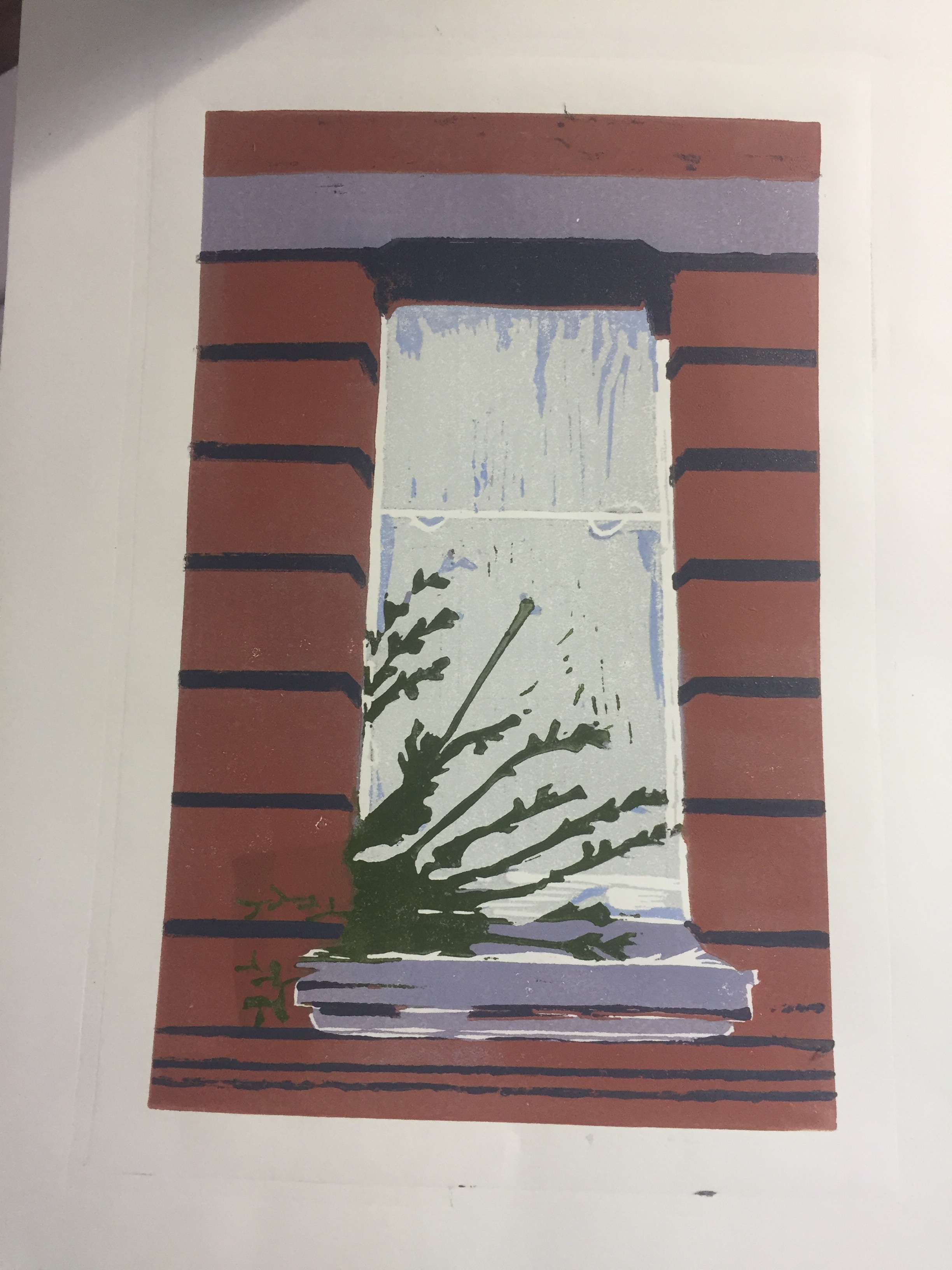
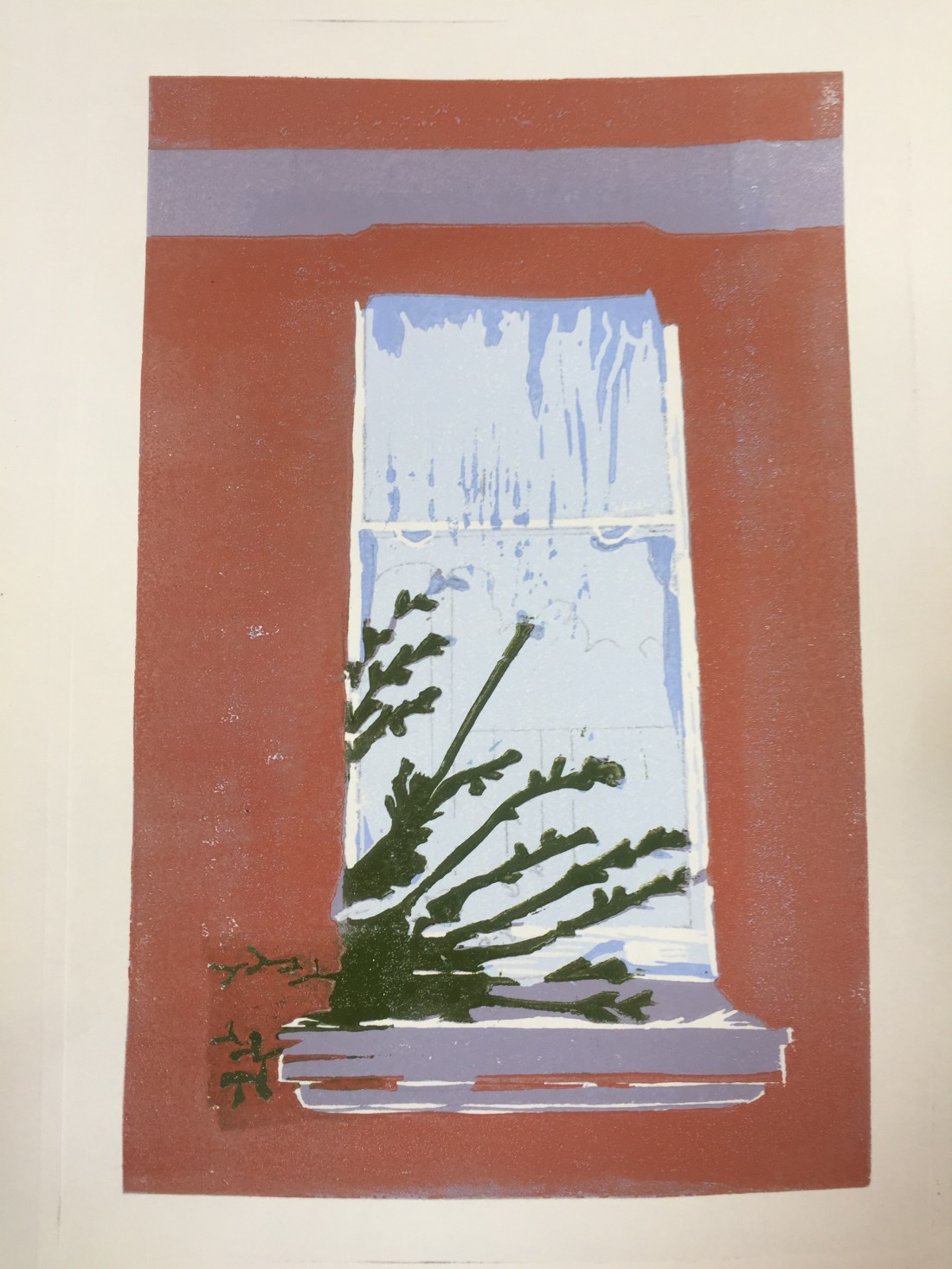
My print depicted a window in the abandoned NHS infirmary in Stockport. The print still needs a final sixth colour to be printed to show off the outline of the brick work.
A total of five individual colours have been printed onto ten prints, which amounts to fifty separate print runs. The final total will be sixty runs and I will have to choose which prints make the edition.
I am pleased with the results so far and look forward to finishing off the print soon. Results will be posted on this blog. Finally my aches and pains have reduced as I write this blog, a warm bath awaits…

 Stockport In Print
You must be logged in to post a comment.