Stockport In Print now has a new Instagram site which went live today.
You can follow the account here: https://www.instagram.com/p/CHVNrO8Hg-q/?igshid=aj1mkz595ezc

A blog about Stockport landmarks by artist/printmaker Neil Robinson which follows a printmaking project depicting the diverse architectural styles of my hometown both new and old.
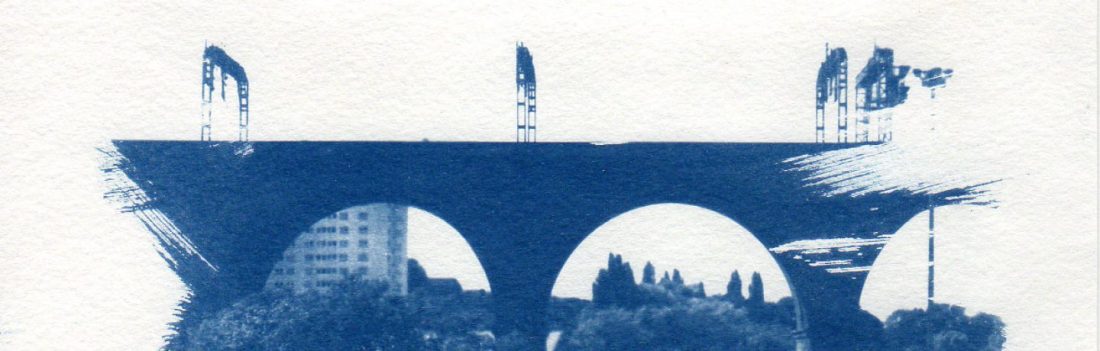
Stockport In Print now has a new Instagram site which went live today.
You can follow the account here: https://www.instagram.com/p/CHVNrO8Hg-q/?igshid=aj1mkz595ezc
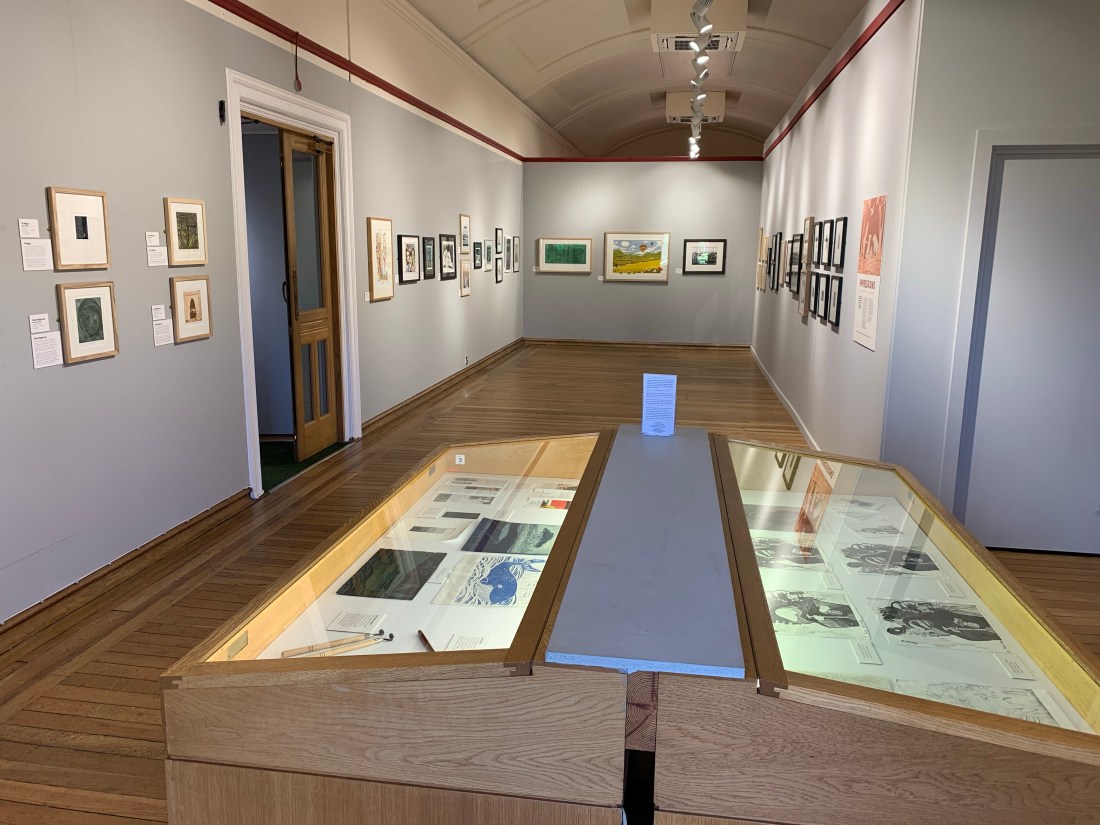
To visit people will need to book a slot with us at Towneley here (Mon-Thurs & Sat-Sun):
http://towneley.org.uk/about/book-your-visit/
From the October half term we change our opening hours to just the weekends 12-4pm, last entry at 3.30pm
I am delighted to have a selection of my prints in the current exhibition- “Impressions: a printmaking response to Towneley” at Towneley Hall in Burnley, Lancashire. Exhibition is on from 19th September 2020 until 19th January 2021. Please book before you visit, link below.
Impressions: A printmaking Response to Towneley
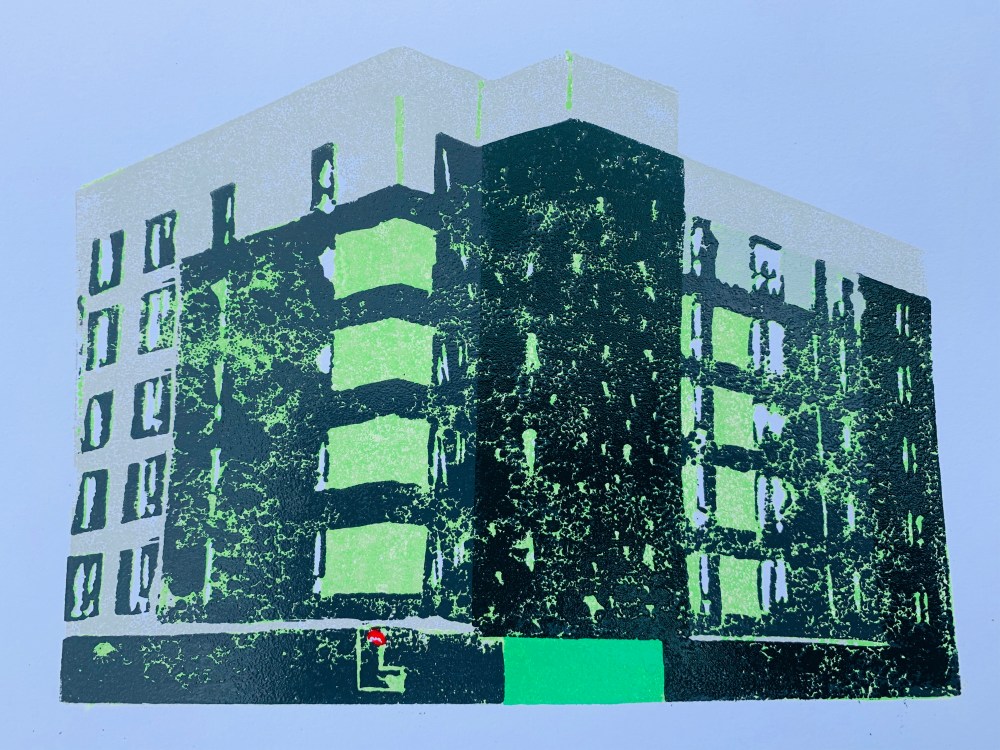
In the months of July and August, I have completed a 7 colour reduction lino-cut print depicting the Mailbox Stockport apartment block which is a former post office building that had been abandoned for years. The building is located in the centre of Stockport just off the A6 main road not far from the railway station. The new building has real foliage and bright green tiled walls on it’s exterior.
I used oil based inks from Hawthorn Printmakers this time apart from the green which is a mix of water-based Pea green and oil based Titanium white. The effect of mixing a water based ink with oil based printing ink is very interesting in that it creates a unusual pattern when the print dries.
I created a total of 10 prints from the plate which I cut down until only a few pieces of linoleum remained. The red colour used in the print was added with watercolour paint.
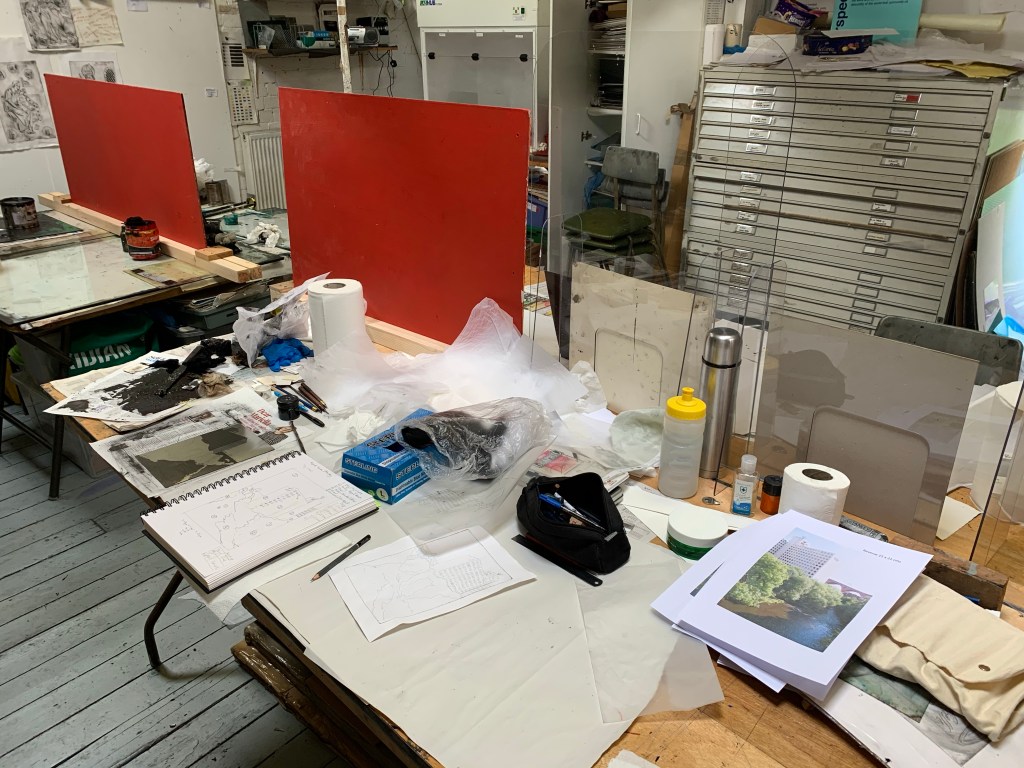
On Sunday I attended a printmaking workshop for the first time in over three months since the lock down began on 23rd March in the UK. My printmaking friend Alan Birch organises weekly workshops for individuals and school groups. Times have been tough for the creative industry during lockdown and my friend has had to install measures such as screens dividing work areas, the use of hand santisers and the 2 metre social distancing rule. During my time away from attending studio workshops, I continued printing at home using my own portable press and hand printing Linos using my handmade printing jig. You can see the results of my efforts in previous posts.
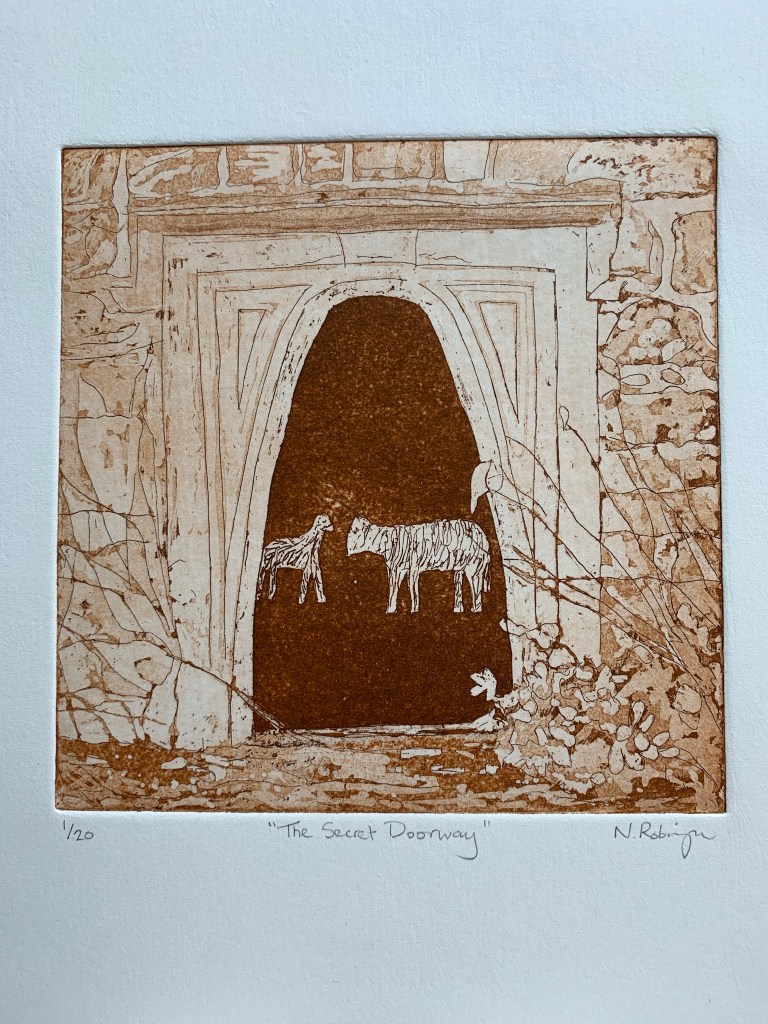
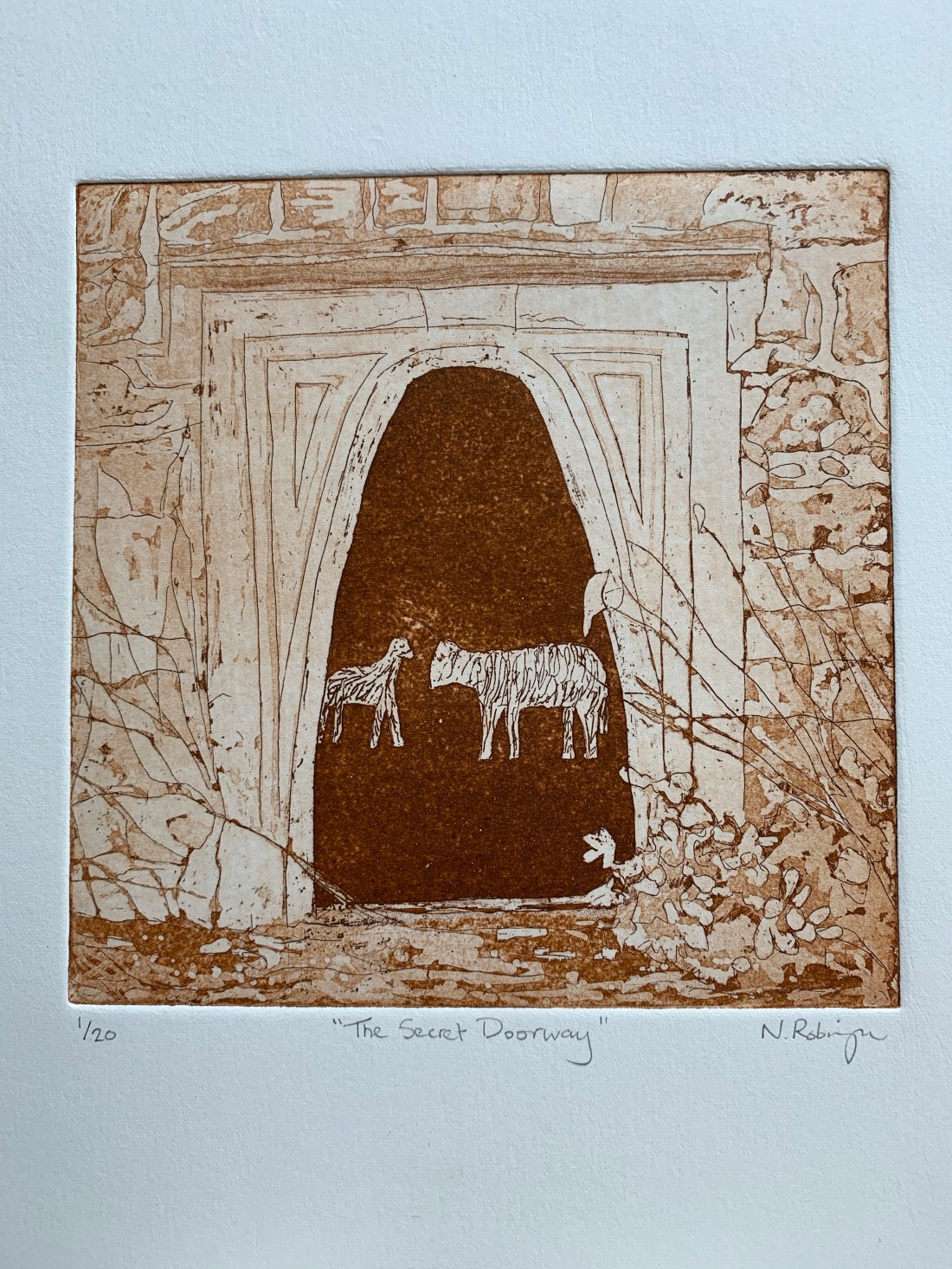
Since my last visit, I have completed a new etching for the forthcoming Towneley Hall exhibition which will open in August (see image above). The print is titled “The secret doorway”.
My latest etching features the river Mersey taken from one of my archive photographs. I hope to complete the print on my next visit to Prospect studios.
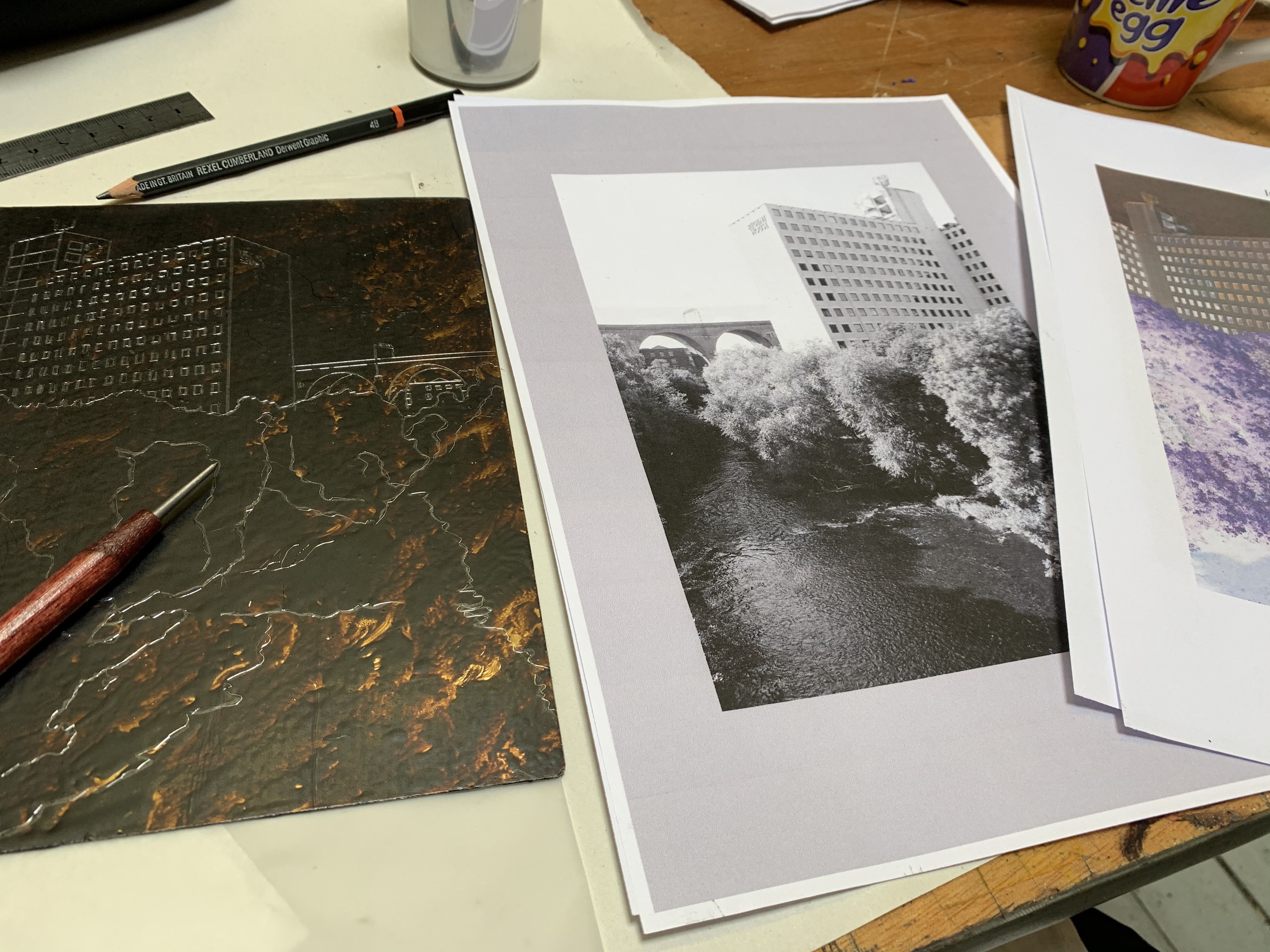
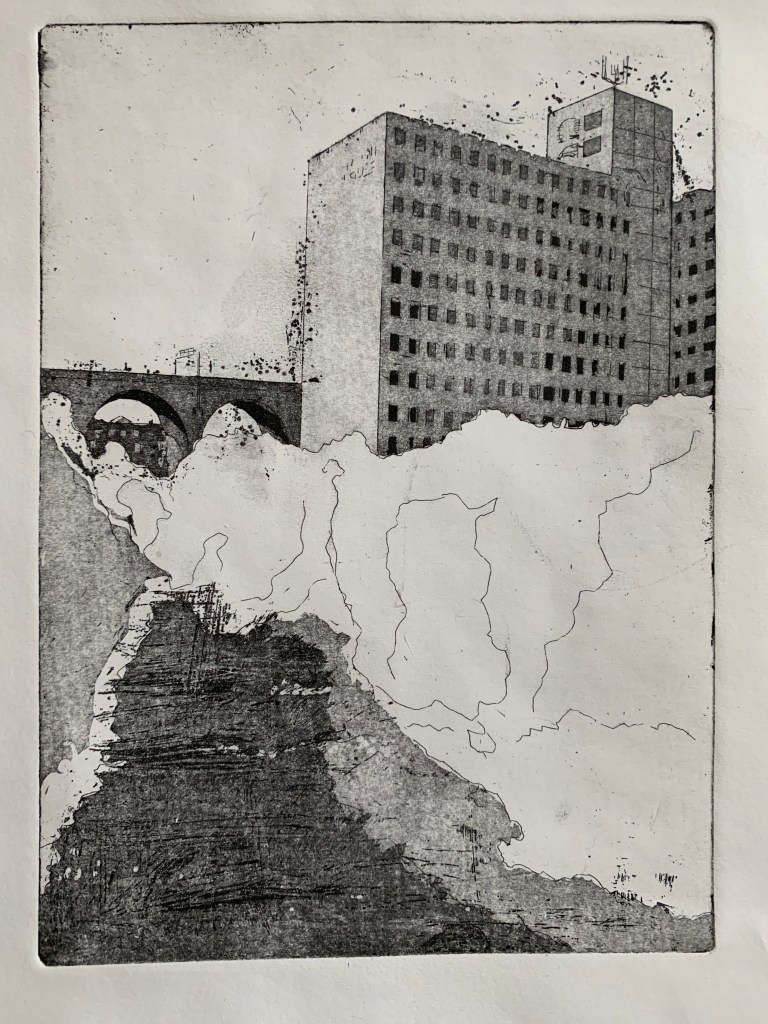
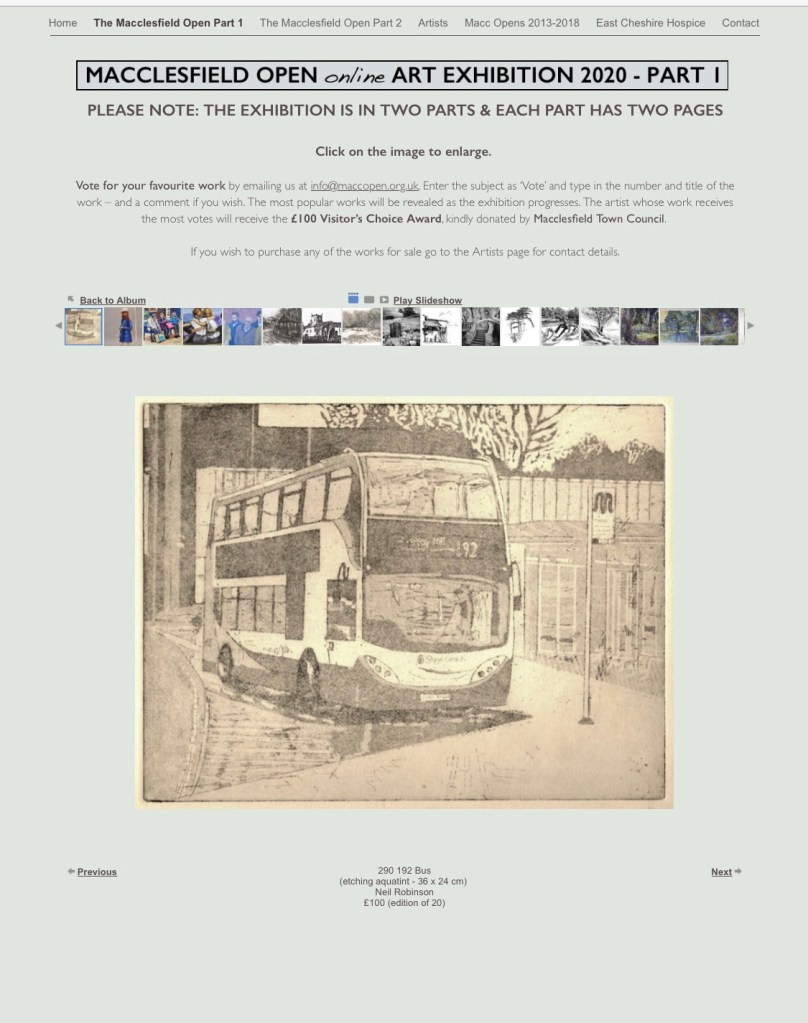
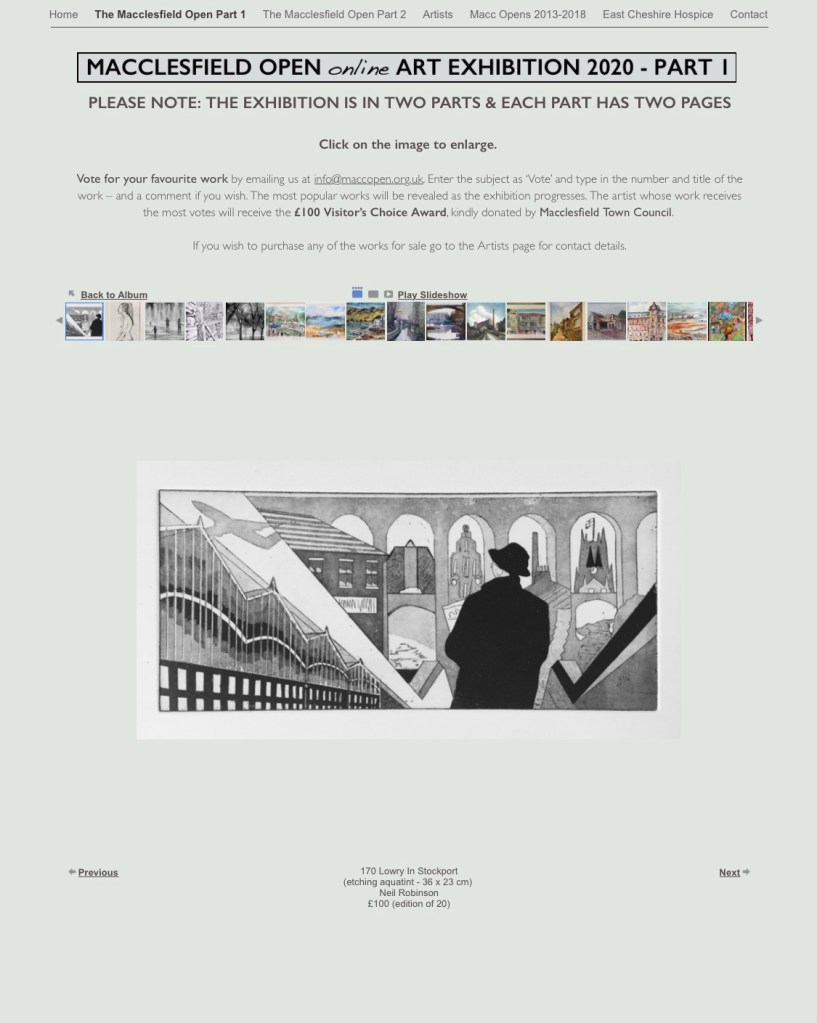
Two of my etchings from the printmaking project are now on display on the Macclesfield Open online art exhibition 2020.
http://www.maccopen.org.uk/maccopen/Home.html
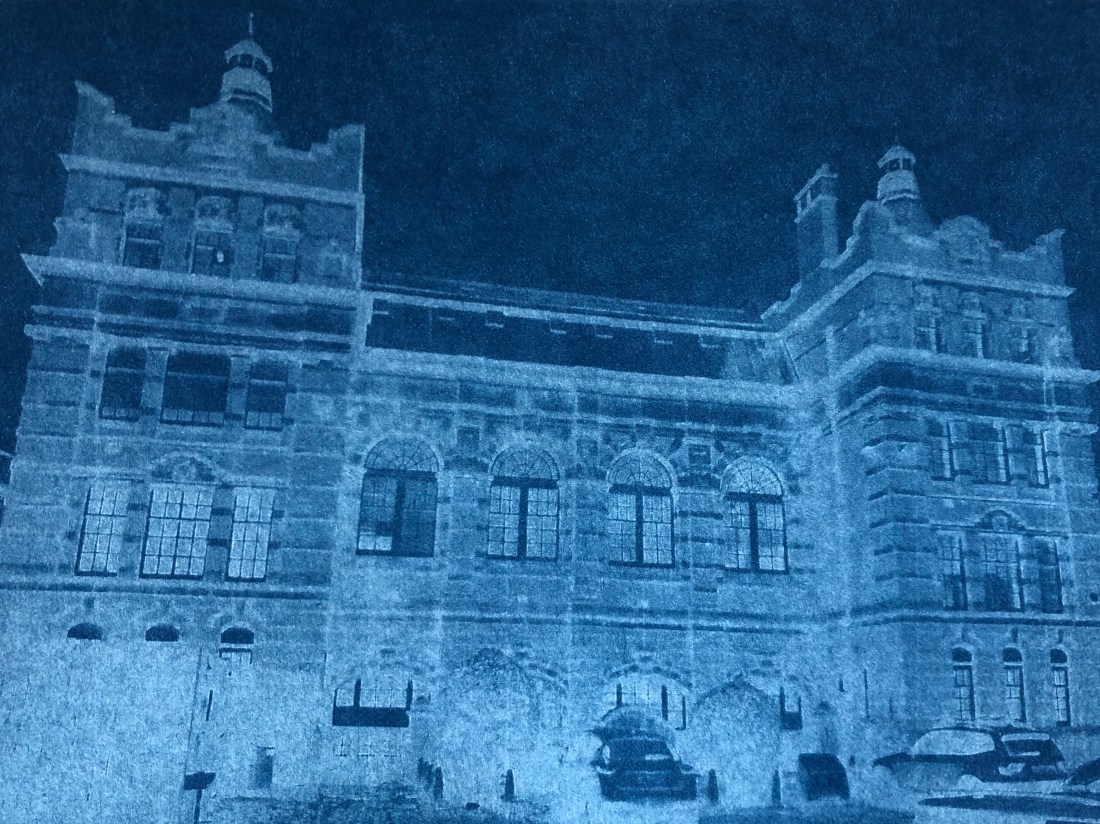
I prefer to use Sunography paper by Noted Llc which I found produced the best results. The paper has to be exposed for at least 10-15 minutes in bright sunlight and is coated on both sides with light sensitive chemicals.
Sunography – Paper (pack of 6 double-coated) https://www.amazon.co.uk/dp/B003EYKKEK/ref=cm_sw_r_cp_api_i_DIcUEbQ6HKX1T
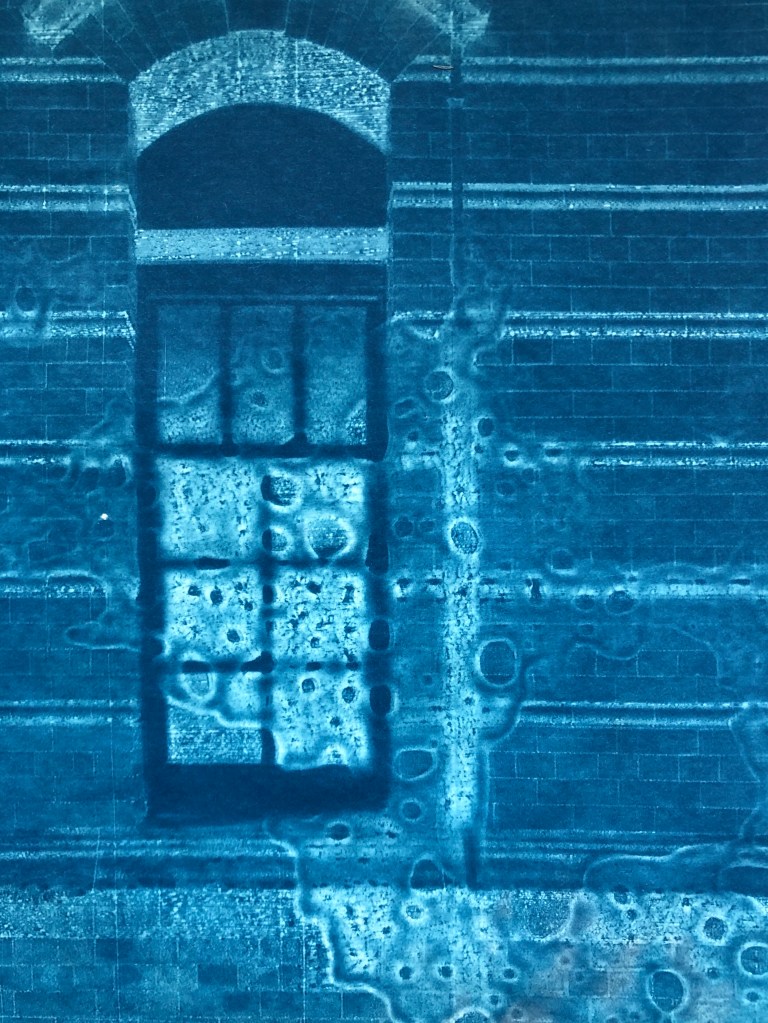
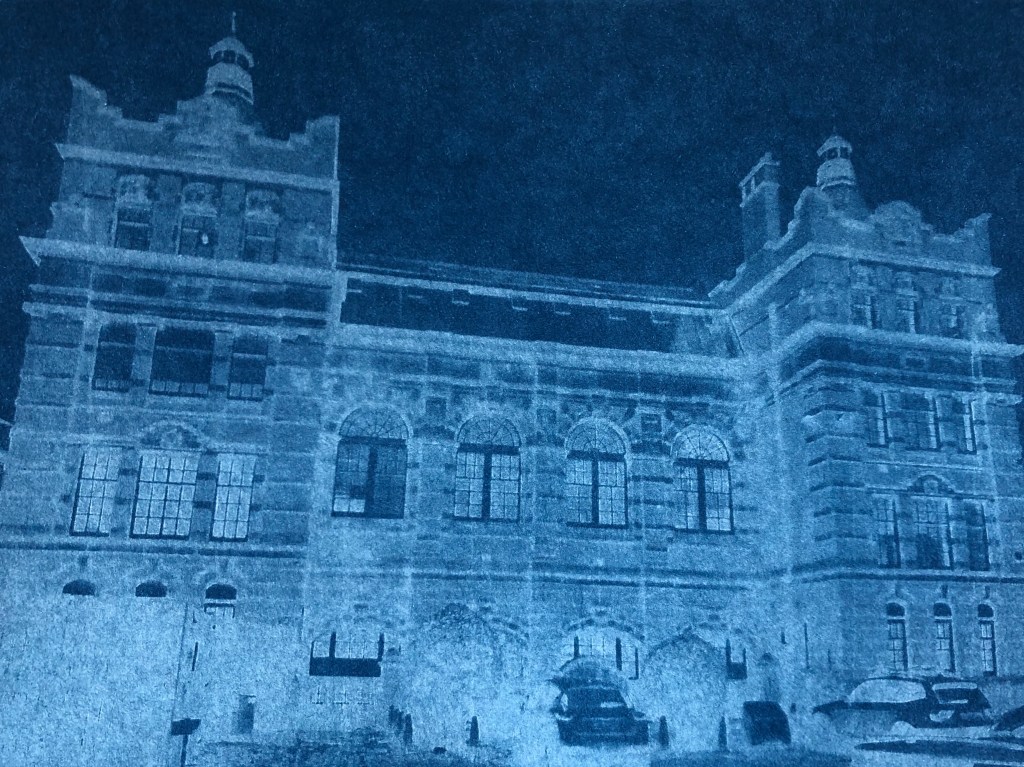
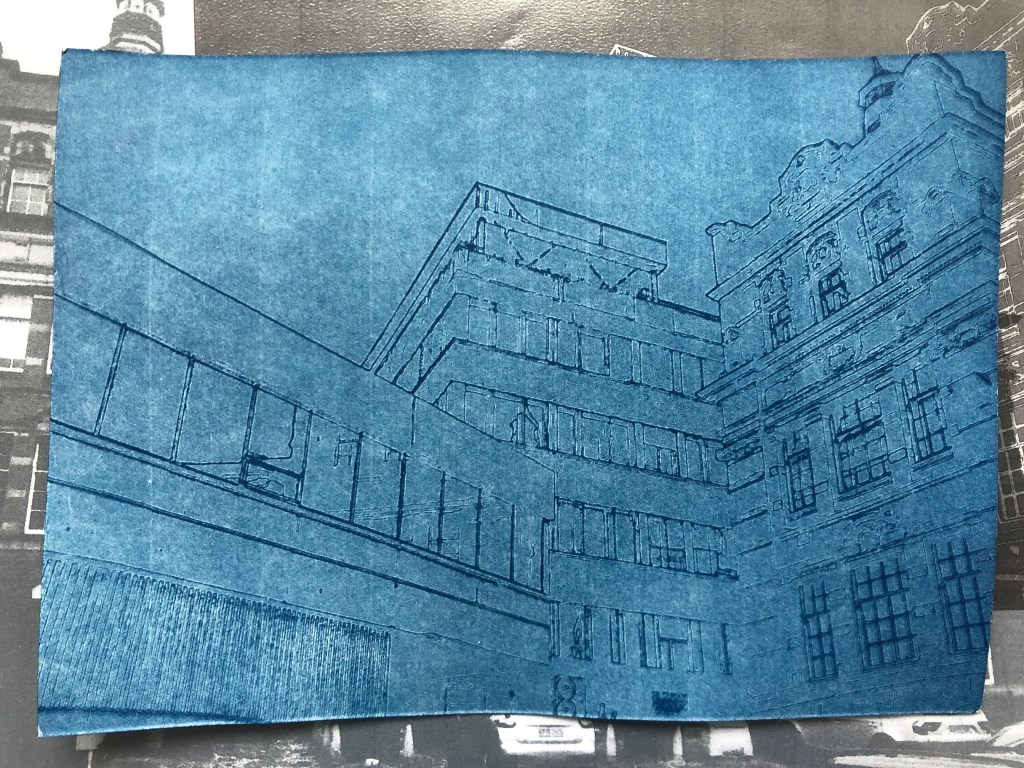
Here are another selection of Cyanotypes (Sun-prints) this time depicting Stockport college selected from some of my digital photographs. The photographs I chose were transferred onto special inkjet compatible OHP transparencies before being used to create the final images. Some moisture blotted the transparency image creating a watery look to the ‘window’ print which was a bit of serendipity.
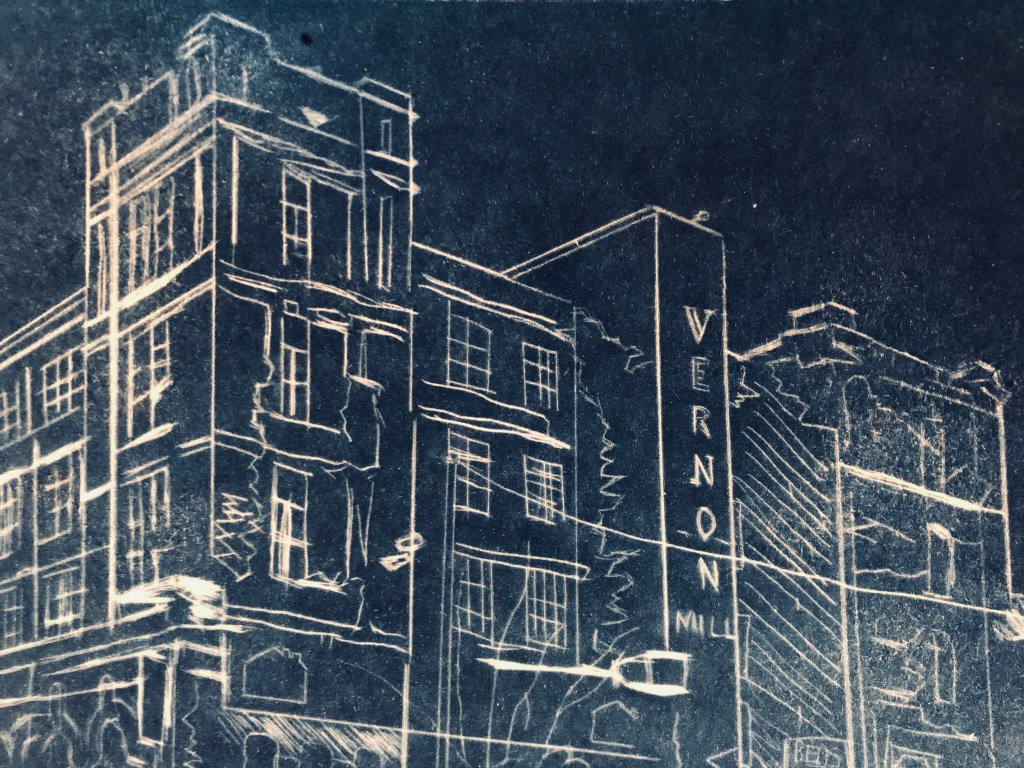
‘Vernon Mill’
Cyanotype print using a drypoint printing plate to transfer image to paper.
Size: 17.5 x 12.5 cms
I have been busy working from home during the lockdown as I my day job is as a Software Analyst. Today was my birthday so I decided to get my portable press out and do some printing.
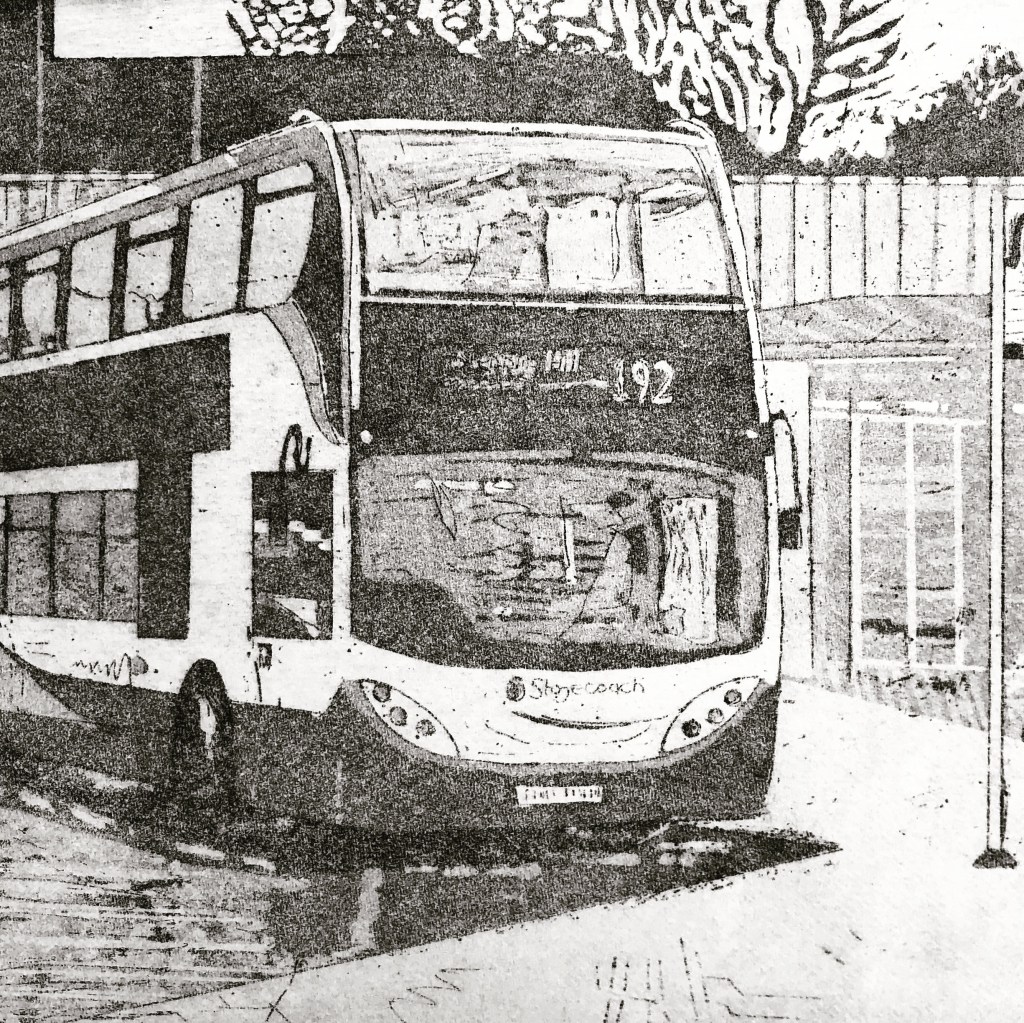
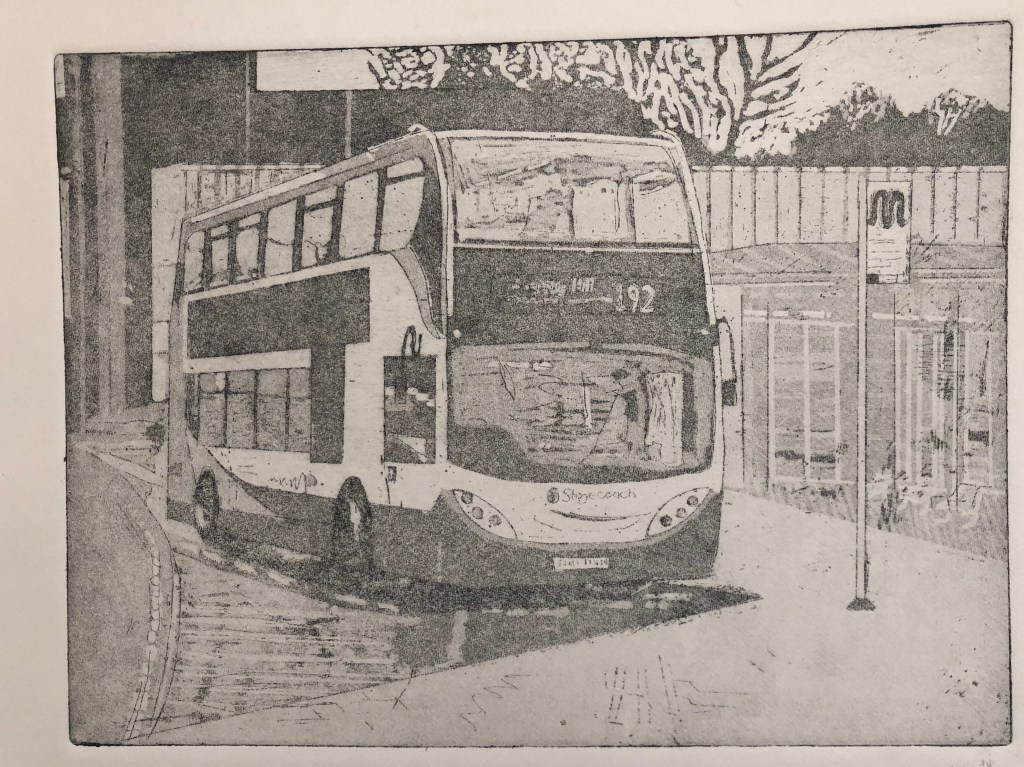
Last month, I managed to complete all the aquatint tones on my print depicting the 192 bus. I usually attend a monthly printmaking workshop organised by my friend Alan Birch at his studio in the Rossendale valley. Due to the Coronavirus pandemic, I have not been able to visit my friend in over a month due to lockdown restrictions, so consequently my bus etching was never printed until now. I am hoping to create some more prints in the coming weeks on other subjects related to my printing project. Look out for further updates! Bye for now.
 Stockport In Print
You must be logged in to post a comment.